Spec sheets are written to sound impressive and read like tax forms. The first time I lined up three listings side by side, half the numbers meant nothing to me and the other half seemed designed to hide the ones that mattered. So I built myself a plain-English translation, one spec at a time, until a listing stopped intimidating me. That is what this is. No hype, no acronyms left dangling, just what each number means, what a good value looks like, and which figures deserve your attention versus which are mostly marketing filler.
Cutting Width and Why It Matters
Cutting width is how wide a strip the mower trims in one pass, usually 6 to 9 inches on robot models. A wider deck covers open ground faster, which helps on bigger lawns, but it can feel clumsy around tight beds and narrow passages. Do not overvalue this number on its own. A robot cuts a little every day rather than racing to finish, so a slightly narrower width rarely hurts a small or medium yard. Think of cutting width as a minor efficiency factor, useful to compare between models but not the headline spec sellers sometimes make it out to be.
For the bigger picture, our main guide How to Choose a Robot Lawn Mower: A Beginner's Guide sets the scene.
Cutting Height and Adjustability
Cutting height is how tall the grass is left after a pass, typically adjustable from about 0.8 to 2.4 inches, or 20 to 60 mm. This one matters more than people expect, because the right height depends on your grass type and the season. Cool-season lawns often prefer a taller cut in summer heat, while some grasses like it shorter. Look for a decent adjustment range and an easy way to change it, whether a dial on the machine or a setting in the app. A mower stuck at one height, or with a narrow range, limits how well you can care for the lawn.
Battery Run Time and Recharge Cycle
Run time is how long the mower cuts on one charge, commonly 60 to 120 minutes, and recharge is how long it sits on the dock afterward, often 45 to 90 minutes. These pair with the rated area to tell you how much lawn the machine keeps up with. Longer run time and shorter recharge mean more cutting per day, which counts on larger lawns. The batteries are lithium-ion and degrade slowly over years. Do not chase the biggest number blindly; a small lawn does not need a marathon battery, and matching run time to your area beats raw capacity every time.
Slope Rating in Percent and Degrees
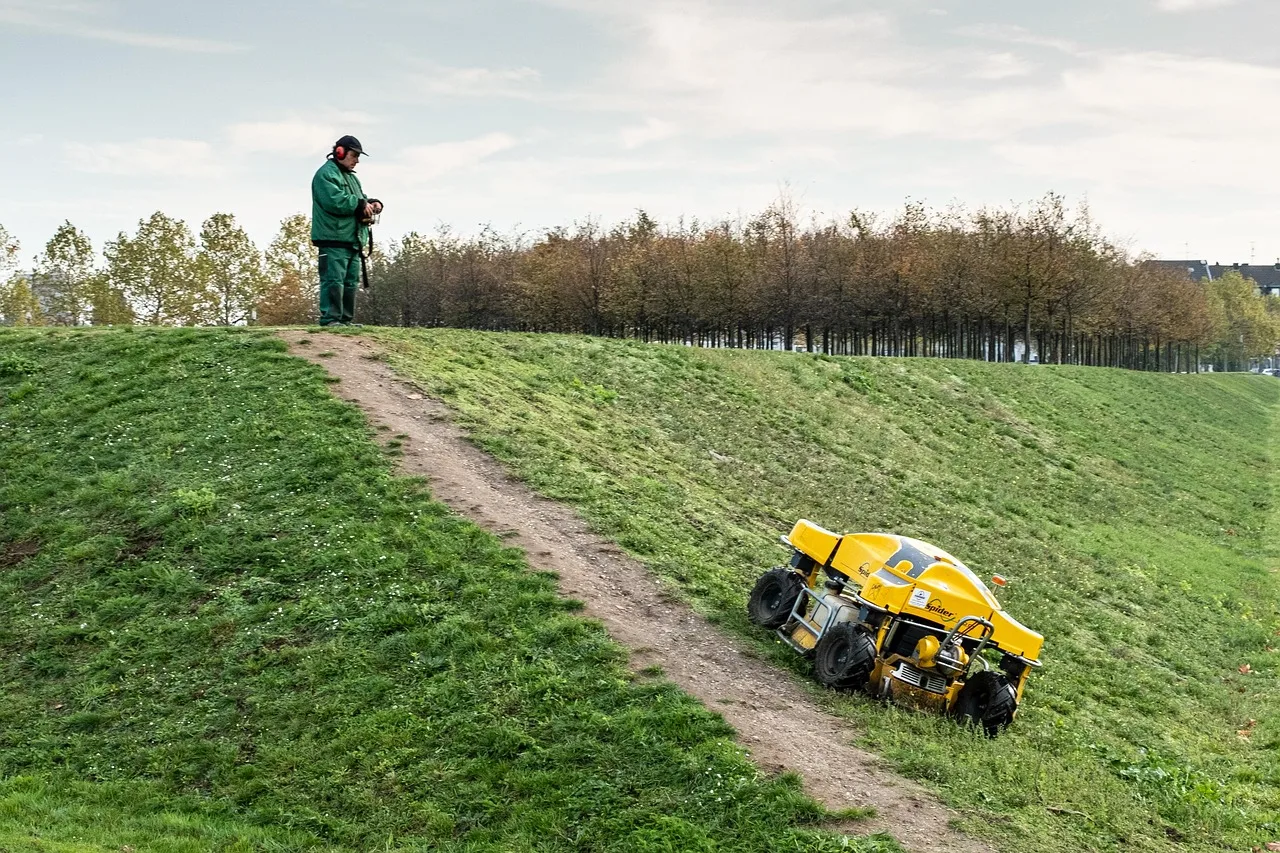
Slope rating tells you the steepest incline the mower can safely climb and cut. Listings quote it as a percentage, and many models handle 25 to 45 percent, which is roughly 14 to 24 degrees. A few specialist units with grippy wheels manage far steeper banks near 70 to 80 percent. Percentages confuse people, so here is the trick: a 45 percent slope rises about 45 feet over 100 feet of run, a noticeable hill. Walk your steepest section and be realistic. Buying a mower that cannot handle your bank means it will slip, stall, or refuse that area entirely.
Spec Sheet Terms Decoded
- Cutting width: how wide each pass trims, usually 6-9 inches
- Cutting height: grass height left, about 0.8-2.4 inches or 20-60 mm
- Run time: minutes of cutting per charge, often 60-120
- Recharge time: dock time between runs, often 45-90 minutes
- Rated area: maximum lawn the mower maintains
- Slope rating: steepest incline, given as a percent
- Navigation: boundary wire or wire-free GPS or RTK GPS
- Lift and tilt sensors: stop the blades when picked up
- Bump sensors: reverse the mower on contact with objects
- Rain sensor: pauses mowing in wet conditions
- Noise level: loudness in dB, usually around 55-60
- Ingress protection: how well the shell resists water and dust
This connects neatly with Seven Robot Mower Buying Mistakes to Avoid.
Navigation Type and Safety Sensors
Two navigation systems dominate. Boundary-wire models follow a perimeter wire you peg down, proven and forgiving under trees. Wire-free models use GPS, often RTK GPS with a reference antenna, mapped in an app, tidy to install but hungry for open sky. Neither is universally better. Alongside navigation, scan the safety specs: lift and tilt sensors that stop the blades in a fraction of a second, bump sensors that reverse on contact, a PIN lock, an alarm, and GPS anti-theft. Rain sensors can pause mowing in wet weather. These features are common now, so treat their absence as a red flag.

For broader background, an overview of how robotic lawn mowers work is a solid reference.
Noise, Blades, and the Small Print
A few smaller specs round out a listing. Noise sits low, roughly 55 to 60 dB, quiet enough that many mowers can run at night, though some HOAs or local rules restrict that. Blades are small razor-style pieces or a star disc, replaced roughly every 6 to 8 weeks in season for a few dollars to about $30 a set. Check the ingress protection rating for weather resistance and confirm app features like scheduling and notifications. These details rarely make or break a purchase, but they shape daily living with the machine, so a quick read saves surprises later.
The takeaway
A spec sheet is just a list of promises once you know how to read it. Cutting width and height describe the trim, run time and rated area describe how much lawn the machine keeps up with, and slope rating and sensors describe where it can safely go. Hold each number against your own yard rather than the competition, and the intimidating listing turns into a simple checklist. Learn these dozen terms once and you will never again nod along to a spec you do not understand. Read in pairs, match to your lawn, and buy with clear eyes.
Our companion piece, How to Match a Robot Mower to Your Lawn Size, picks up where this leaves off.