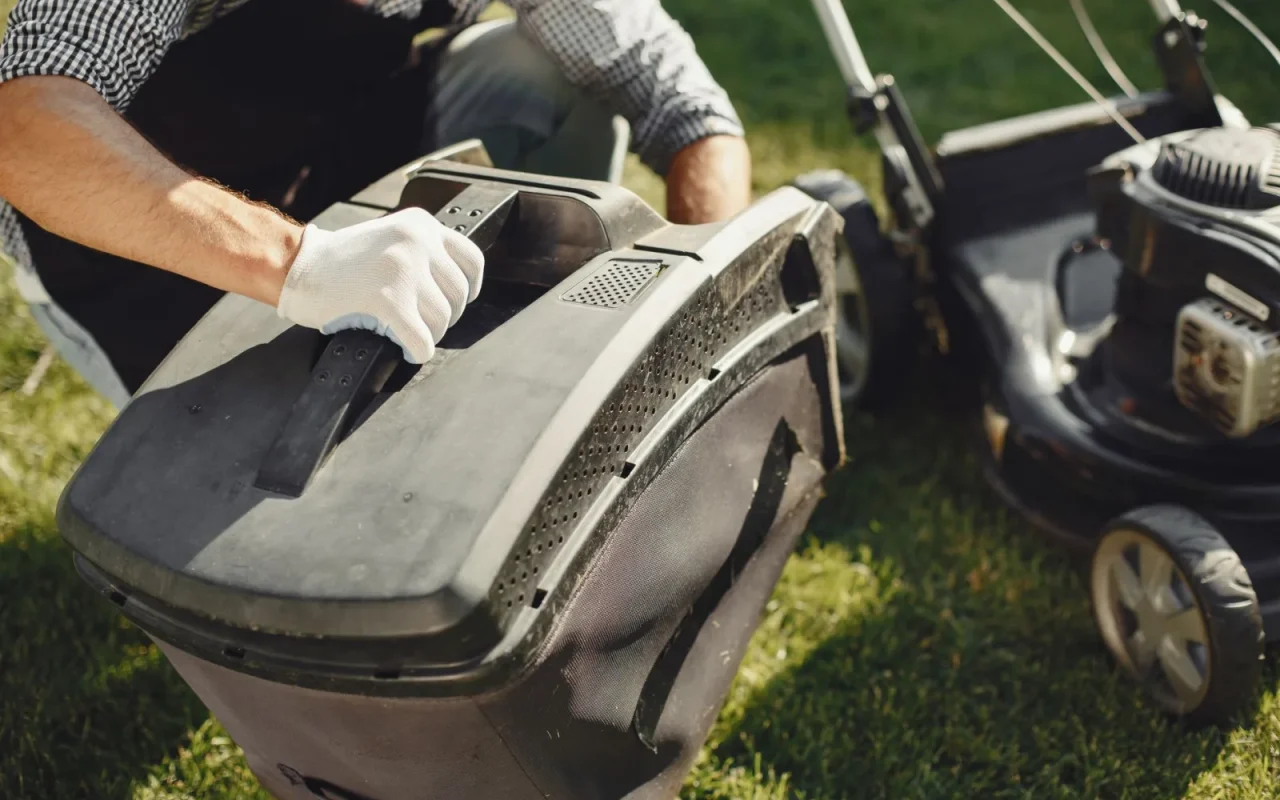
Once a year, I clear a bench, pour a coffee, and give my mower the kind of going-over a mechanic gives a car at its yearly inspection. It takes about an hour, and it has caught things I would never have spotted during a quick weekly wipe: a hairline crack in a wheel, a pitted charging contact, a blade screw backing itself out. The weekly cleaning keeps it running. The annual service keeps it running for years. Below is the full checklist, broken into stations so you can work through it in order without missing anything. Do it at spring startup or at the end of the season, whichever suits you.
Station One: Full Clean and Deck Inspection
Start with a proper deep clean, more thorough than any weekly wipe. Power the mower down, engage the safety lock, and flip it onto a padded surface. Scrape every trace of caked grass from the deck and the blade ring, then damp-wipe the housing and the underside without ever blasting it with a hose. With the deck clean, inspect it in good light for cracks, warping, or worn mounting points. Clippings hide these flaws all season. A cracked deck near the blade disc is a safety issue, so if you find one, stop and arrange a repair before the mower runs again. This clean also sets you up to inspect everything else clearly.
If you are just getting oriented, Robot Mower Maintenance: The Complete Guide is the best place to begin.
Station Two: Blades, Disc, and Hardware
Fit a fresh set of blades as part of the annual service, even if the old set has some life left, because a new set every season is cheap insurance for a clean cut. Check that each blade pin or clip is tight and that the star disc, if your model uses one, spins freely and true without wobble. Replace any screw that looks worn or stripped from the spares box. Spin the disc by hand and listen for grinding, which points to a tired bearing. Fresh, balanced blades and solid hardware are the difference between grass that is sliced cleanly and grass that is torn and browning by midsummer.
Station Three: Battery and Charging Health
The battery deserves a real look once a year. Run the mower until it returns to base and note whether the run time matches what it managed when new. A pack that now lasts roughly half as long is nearing end of life and may need replacing within the season. Clean the charging contacts on both the mower and the base with a fine emery cloth until they are bright, since corrosion here causes the classic no-charge fault. Confirm the pack sits properly in its housing and that no wiring looks chafed. Most batteries last three to five years, so track this figure yearly to see the trend.
Station Four: Wheels, Sensors, and Body
Turn to the running gear. Check each drive wheel for smooth, worn tread and replace any that slip, since worn wheels are a top cause of failing to climb a slope the mower used to manage. Pick grass and mud from the wheel wells and confirm the wheels turn freely. Wipe the lift and tilt sensors, the bump sensor, and any rain sensor windows clean, then test them: lifting the mower should stop the blades instantly. Inspect the bumper and shell for cracks. These safety systems are the whole reason a robot mower is safe around a yard, so they earn a careful yearly check.
The One-Hour Annual Service Checklist
- Power off and engage the safety lock before handling
- Deep clean the deck and inspect it for cracks or warping
- Fit a fresh, balanced set of blades
- Tighten or replace blade screws and clips
- Measure run time against the mower's original figure
- Clean charging contacts on the mower and base until bright
- Check and replace worn wheels, then clear the wheel wells
- Wipe and test lift, tilt, bump, and rain sensors
- Walk the boundary and guide wire, splice any breaks
- Level and secure the base and check the power lead
- Install the latest firmware and review the schedule and PIN
- Run a full test lap and watch the whole cycle
We break down the next step in How to Keep Robot Mower Charging Contacts Clean.
Station Five: Boundary Wire, Guide Wire, and Base
Wire owners should walk the full boundary and guide wire loop, looking for spots where a spade, an aerator, or frost heave may have nicked the insulation. Reseat any pegs that have popped up and splice any suspect sections with a waterproof connector. At the base, check that it sits level and firmly pegged, that the power lead is undamaged, and that the transformer brick is dry and cool in operation. Wire-free GPS owners instead confirm the reference antenna is clear of new obstructions and has a clean sky view. A fault here is a common reason a mower gets lost or refuses to leave its dock.

You can also dig into general lawn mower mechanics for the wider science.
Station Six: Software, Settings, and Test Run
Finish at the app. Install any pending firmware update, since makers push fixes for navigation, charging, and safety through the season, and an outdated mower can behave oddly for no obvious reason. Review your schedule and cutting height for the coming season, adjust zones if the garden has changed, and confirm the PIN and anti-theft settings are active. Then send the mower out for a full test lap and watch it. It should leave the base cleanly, cut evenly, climb its usual slopes, and dock without fuss. If anything looks off, you now know exactly which station to revisit before the season gets going.
What to do next
A robot mower is happy to be ignored right up until the day it is not, and that day almost always lands in peak mowing season when you least want the hassle. An hour once a year, worked through station by station, is how you stay ahead of it. You catch the cracked wheel, the pitted contact, the fading battery while they are still cheap and easy. Pick a date, keep a simple record of what you find, and your mower rewards the effort with seasons of quiet, reliable cutting instead of surprise failures on a Saturday afternoon.
Many readers move on to Spring Startup: Waking a Robot Mower After Winter next.